The Kindest Man on the Hill
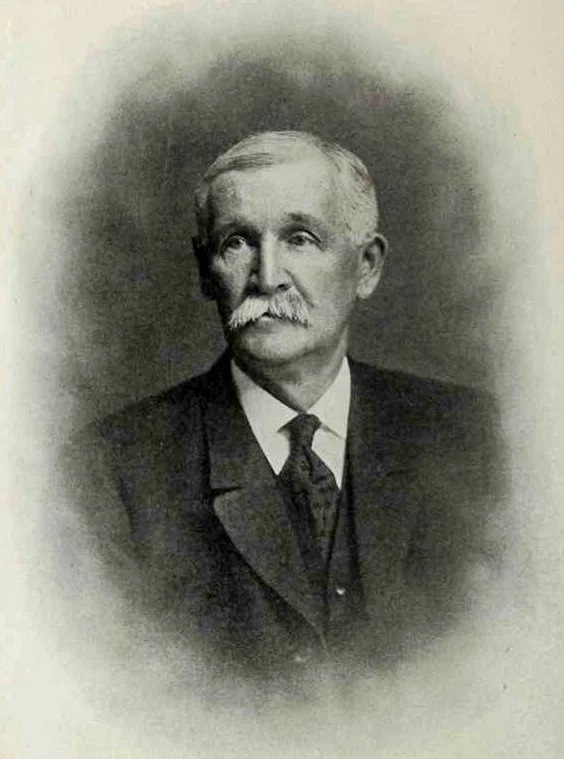
The April 1921 issue of the Phillips Bulletin honored Matthew Scoby McCurdy.
Andover, Massachusetts, sits on a rise about 20 miles north of Boston that softens into long streets lined with elms and white clapboard, a town of church bells folding into the evening. For more than two centuries, its identity has been braided tightly with Phillips Academy — the esteemed hilltop school founded in the heat of the American Revolution, shaped by the stern resolve of Calvinists who believed youth could be molded toward both scholarship and service.
Presidents walked these grounds. Poets. Generals. Boys who would become financiers, diplomats, and authors carried their books beneath these same trees. The school’s motto Non Sibi — “not for oneself” — hung over doorways and chapel arches like a plea and a dare.
By the time Matthew Scoby McCurdy, my second great-grandfather, arrived in fall 1873, Phillips Academy was beginning a slow and deliberate transformation under its new principal, Cecil Bancroft, who broadened the curriculum, tightened academic expectations, and recast the school as a rising college-preparatory powerhouse. Enrollment grew. The campus spread. And through each phase of that renewal, Matthew — newly graduated from St. Johnsbury Academy and then Dartmouth, earnest and steady — found his place.
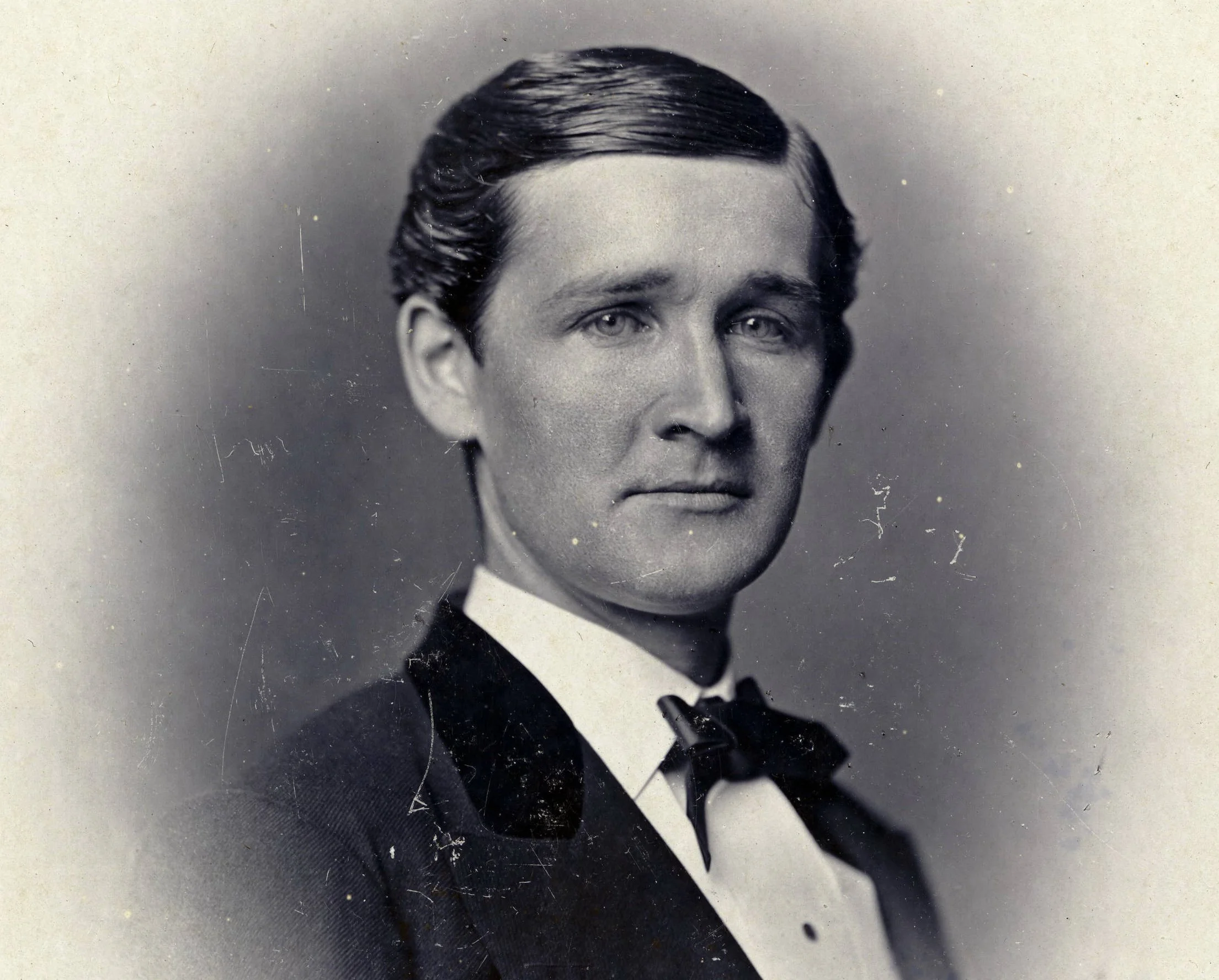
Matthew McCurdy was a member of Dartmouth’s Class of 1873. He was a member of the Delta Kappa Epsilon fraternity.
He was hired at 24 to teach English and gymnastics, but mathematics was where he settled, and where students settled into trusting him. Tall, mild, even-tempered, he became one of Phillips Academy’s most recognizable figures. Students called him “Mac.” Alumni, decades later, still asked after him: How’s Mac? It was always the first question.
He began his life in Andover in a brick boardinghouse on Main Street, where in 1880 the McCurdy household included five students — at least one from the Andover Theological Seminary, one from China — and a 21-year-old domestic, Julia Butler. But by 1892, with three sons and a growing sense of permanence, Matthew bought a parcel at the corner of Bartlet and Morton streets and built the Georgian Revival house that would carry the family’s name for decades.
It was a handsome structure — broad, symmetrical, generous with light — the sort of house that announced stability rather than ambition. Matthew and his wife, Lydia Eudora Morrill, youngest daughter of the the Hon. Calvin Morrill of St. Johnsbury, Vermont, raised their children — Robert, Sidney, and Allan — there. All three would graduate from Phillips Academy. Two would attend Dartmouth, one Harvard. Robert would become a librarian connected with Doubleday, Page & Co. Allan would teach in the Indian Service, then run schools across New Hampshire. Sidney, my great-grandfather, would become a respected physician.
Inside the Bartlet Street house, the McCurdys lived with a quiet orderliness. Their longtime domestic, Margaret Stapleton of Tipperary, moved through the rooms with practiced familiarity. Summers meant open windows and the sound of boys calling up the stairs. Winters meant the ticking of radiators and Matthew’s steady footfall passing from hall to parlor.
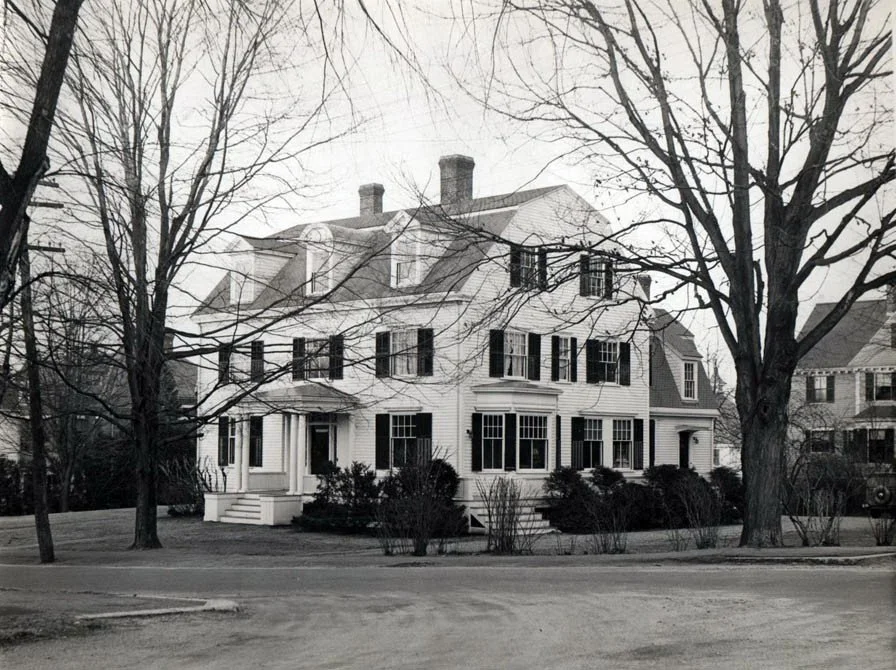
The white-clapboard house at 60 Bartlet St., captured long before the modern additions. For decades it held the quiet routines of family life, its windows facing the steady procession of students walking toward the Academy.
Every morning he walked the short distance to the Academy — a few blocks along Bartlet Street, past maples and colleagues’ porches, down toward the brick and granite of the Hill. He would have known the path by heart: the curve toward the Rabbit Pond, the sweep of lawn behind the Chapel Cemetery where author and abolitionist Harriet Beecher Stowe and her husband lay buried. Generations of Andover students passed those graves as if moving through a conversation the town had been having with itself since the 1700s.
Matthew’s contribution to that conversation was a life of constancy. His algebra workbook, “An Exercise Book in Algebra,” was published in 1892 and remained in use long after the century turned. He rarely missed a day of teaching. He served as deacon, first at the Seminary church and later at the Phillips Academy church, anchoring his faith with the same steadiness he brought to his classroom. And he never missed an Andover–Exeter contest — not once in more than 30 years. Athletics, he liked to say, were his recreation. Watching young men grow strong and sure of themselves was just another form of teaching.
Yet he was not a man without horizons. In 1910-11, he and Lydia spent a full year traveling through Europe, their first true sabbatical in decades. Other summers took him as far as Washington, California, and the Great Lakes. He crossed oceans, saw cathedrals and coastlines, but always returned to Andover with relief, as though distance had clarified where his life was meant to be.
A colleague later tried to describe the balance that defined him: “The field of his teachings was a realm of exactitude, undeviating precision, inevitable results; yet his path lay through the flowering fields of God’s good world.” Orderly in his work, open-hearted in everything else — it was the tension that made him who he was.
Students described him as the kindest professor, the “cinchiest” to recite to — not because he was easy, but because he made boys feel capable. He prized neatness, disliked attention, read widely, rose early to study the weather, and could identify trains by their whistles.
At alumni dinners, he was invariably the favorite speaker, resurrecting old games and old classmates as if paging through a well-kept scrapbook. When he stood to recount the history of athletics, or to praise a long-ago oarsman who rowed at Yale, the room leaned toward him.
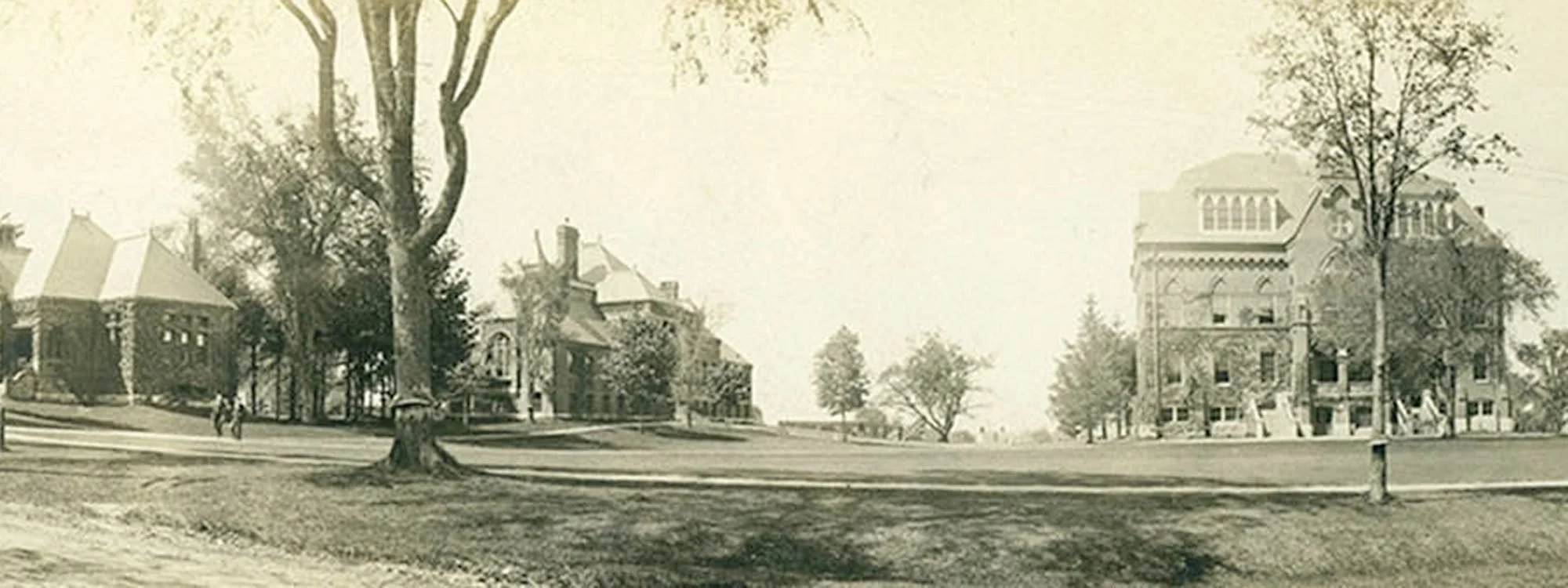
A panoramic view of Phillips Academy around the turn of the 20th century, its stone and brick buildings set among open lawns and maturing elms.
Over the decades, boys who passed through his classroom went on to write novels, argue cases, lead regiments, build companies. Edgar Rice Burroughs, before he dreamed up Tarzan, sat in these same rooms. So did the future founder of the Baseball Hall of Fame, a future general, a future publisher. Matthew never made much of it. They had simply been his students.
Andover changed around him. Automobiles began appearing on Main Street. Phillips Academy expanded — dormitories, science labs, a modern dining hall. New students arrived from Boston, New York, Shanghai. But Matthew’s manner never shifted with the times. He kept to the same steady routines, took the same evening walks, taught the same careful logic. He was, as one colleague later wrote, “a Christian gentleman” whose joy lived in “the small, faithful acts.”
His days moved in reliable measures — the walk home, the chapel pew, the long sweep of seasons through his classroom windows. Change rarely came quickly for him.
Which is why what happened in February 1921 felt so abrupt.
Matthew and Lydia were walking home from a visit with another faculty family on Hidden Road. It was just after 8 p.m. A large automobile came barreling down Main Street toward Boston. Lydia had already crossed. She thought her husband was safe behind her. Then she turned and saw him on the ground, blood on the snow, the car already gone.
He lived 10 days — long enough for hope to rise and fall, long — and died on Feb. 16, age 71, the oldest member of the Phillips Academy faculty.

An issue of The Andover Townsman from Feb. 11, 1921, captures a community startled by the news of the hit-and-run.
At his funeral, the chapel doors opened early so townspeople, students, colleagues, and returning alumni could file past the coffin. Faculty members served as pall bearers and ushers. Telegrams arrived from across the country. One word appeared again and again, simple and almost shy: beloved.
“He nursed no sore spots in his soul,” one eulogist said. Another noted that when life was dark, he had been its light. His spirit, someone wrote, “ran its course like a limpid brook.”
Lydia lived quietly for many years afterward in Andover. In 1937, the Bartlet Street house was sold — 15 rooms, high ceilings, and the memory of a life walked steadily through nearly 50 years of school and town. Today, renovated and enlarged with an in-ground saltwater pool, the McCurdy House is worth more than $2.6 million. But its value lies elsewhere — in the notion that a home can still hold the outline of the people who moved patiently through it.
Today, Matthew McCurdy’s name survives on a mathematics prize awarded to Phillips Academy seniors for diligence and understanding — for showing their work. Most who receive it never know the man behind the plaque. They hurry past the old classrooms, unaware that once a teacher stood there with chalkdust on his sleeves and patience in his voice, steadying generations the way he always walked home: quietly, faithfully, step by measured step.